Poche practice on Iranian architecture

[Mohammad Reza Mahmoudi, 2025-2026]


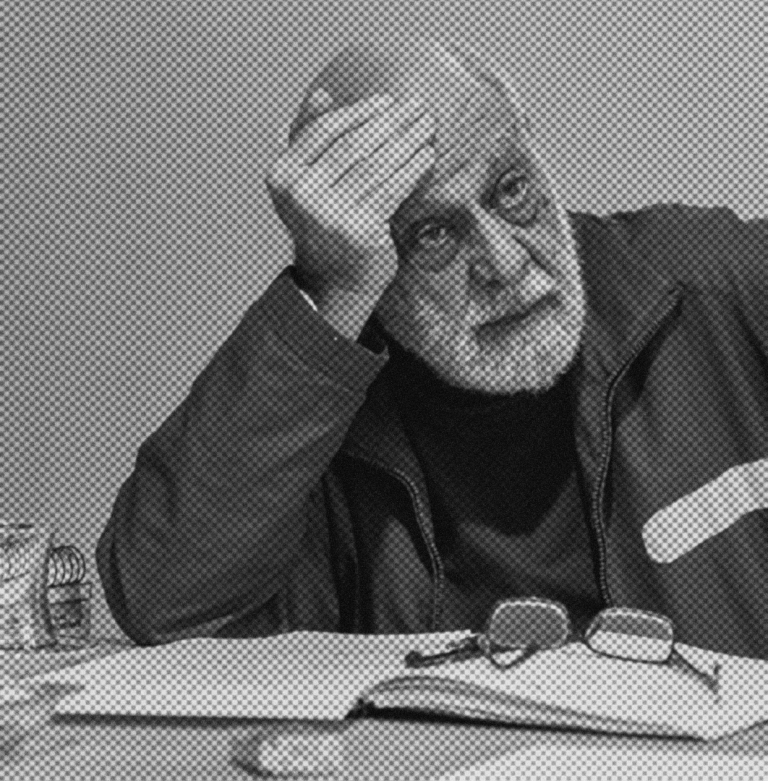
I had an interpretation of a conversation with Bahram Shirdel:Can one, by extracting the poche derived from the spatial sections of architectural masses arrive at a new logic of structure? I believe that drawing the poche of Iran’s historical architecture can be an endless and essential exercise in abstracting this architecture.


2.Si-o-se-pol bridge

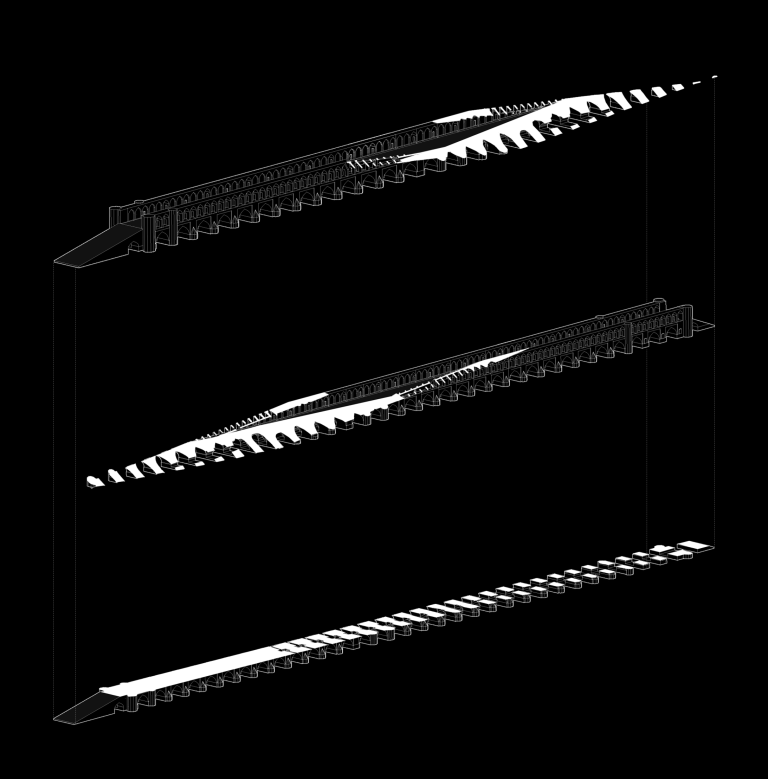
The extraction of the poche, derived from the spatial sections of Si-o-se pol, reveals above all the logic of repetition.

Unlike Khaju Bridge, spatial variation here is tightly controlled; and it is precisely this uniformity of pause and movement that preserves Si-o-se-po’s fidelity to the diagram of a bridge. Unlike Khaju Bridge, spatial variation here is tightly controlled; and it is precisely this uniformity of pause and movement that preserves Si-o-se-po’s fidelity to the diagram of a bridge.

1. Khaju bridge

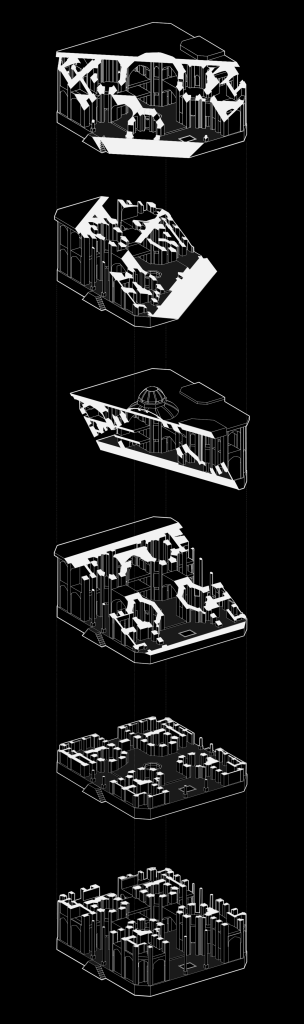
4. Tarikhaneh

by: Mohammad Reza Mahmoudi

2025 – 2026

3. Hasht Behesht Palace 

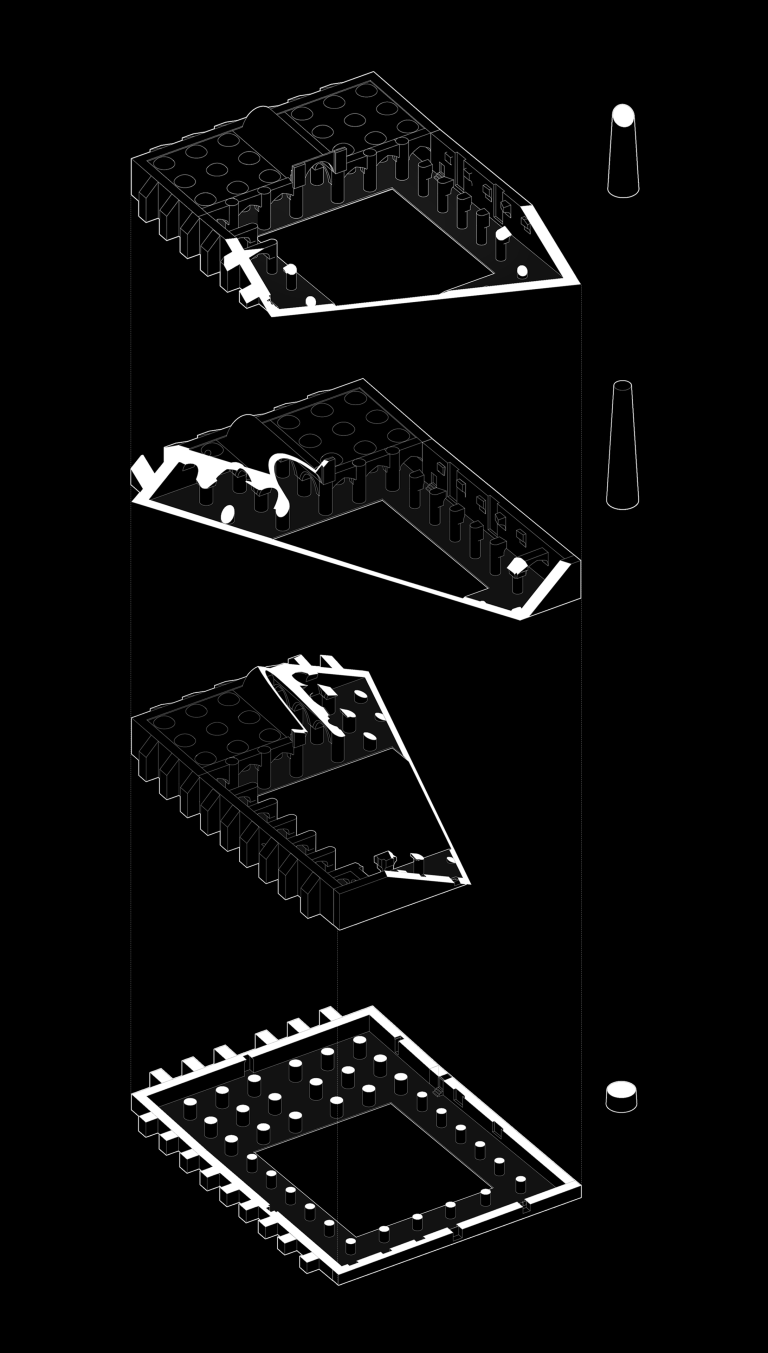
The extraction of poche through random sectional cuts in Kosshk-e Hasht Behesht reveals that this pavilion exhibits a behavior inverse to the dominant pattern in Safavid residential and royal architecture. In conventional structures, the density of mass gradually increases from the outer envelope toward the interior. In Hasht Behesht, however, this intensification begins at the exterior and reaches its peak at the Chaharsoffeh; yet, upon passing beyond this zone and entering the cruciform (chahar-taqi) space, the mass is reduced to its minimum.

This distinctive pattern in the distribution of mass and space is one of the principal factors enabling the simultaneous emergence of both extroverted and introverted spatial qualities in Kosshk-e Hasht Behesht.

Poche practice on Iranian architecture

[Mohammad Reza Mahmoudi, 2025-2026]


I had an interpretation of a conversation with Bahram Shirdel:Can one, by extracting the poche derived from the spatial sections of architectural masses arrive at a new logic of structure? I believe that drawing the poche of Iran’s historical architecture can be an endless and essential exercise in abstracting this architecture.


2.Si-o-se-pol bridge

The extraction of the poche, derived from the spatial sections of Si-o-se pol, reveals above all the logic of repetition.

Unlike Khaju Bridge, spatial variation here is tightly controlled; and it is precisely this uniformity of pause and movement that preserves Si-o-se-po’s fidelity to the diagram of a bridge. Unlike Khaju Bridge, spatial variation here is tightly controlled; and it is precisely this uniformity of pause and movement that preserves Si-o-se-po’s fidelity to the diagram of a bridge.

1. Khaju bridge

4. Tarikhaneh

by: Mohammad Reza Mahmoudi

2025 – 2026

3. Hasht Behesht Palace 

The extraction of poche through random sectional cuts in Kosshk-e Hasht Behesht reveals that this pavilion exhibits a behavior inverse to the dominant pattern in Safavid residential and royal architecture. In conventional structures, the density of mass gradually increases from the outer envelope toward the interior. In Hasht Behesht, however, this intensification begins at the exterior and reaches its peak at the Chaharsoffeh; yet, upon passing beyond this zone and entering the cruciform (chahar-taqi) space, the mass is reduced to its minimum.

This distinctive pattern in the distribution of mass and space is one of the principal factors enabling the simultaneous emergence of both extroverted and introverted spatial qualities in Kosshk-e Hasht Behesht.

  • Home
  • About Me
  • Contact Me
  • Projects
  • Awards