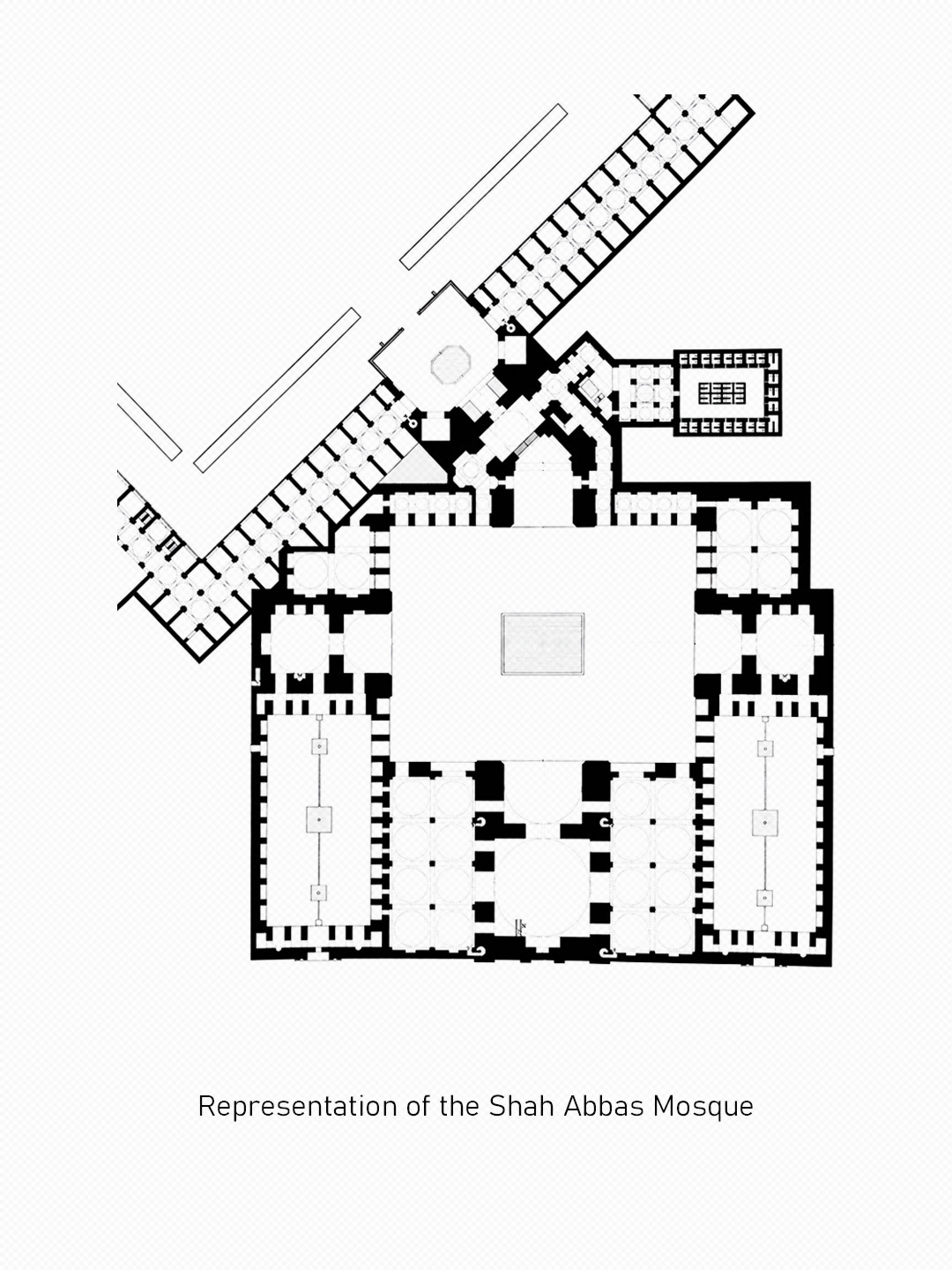
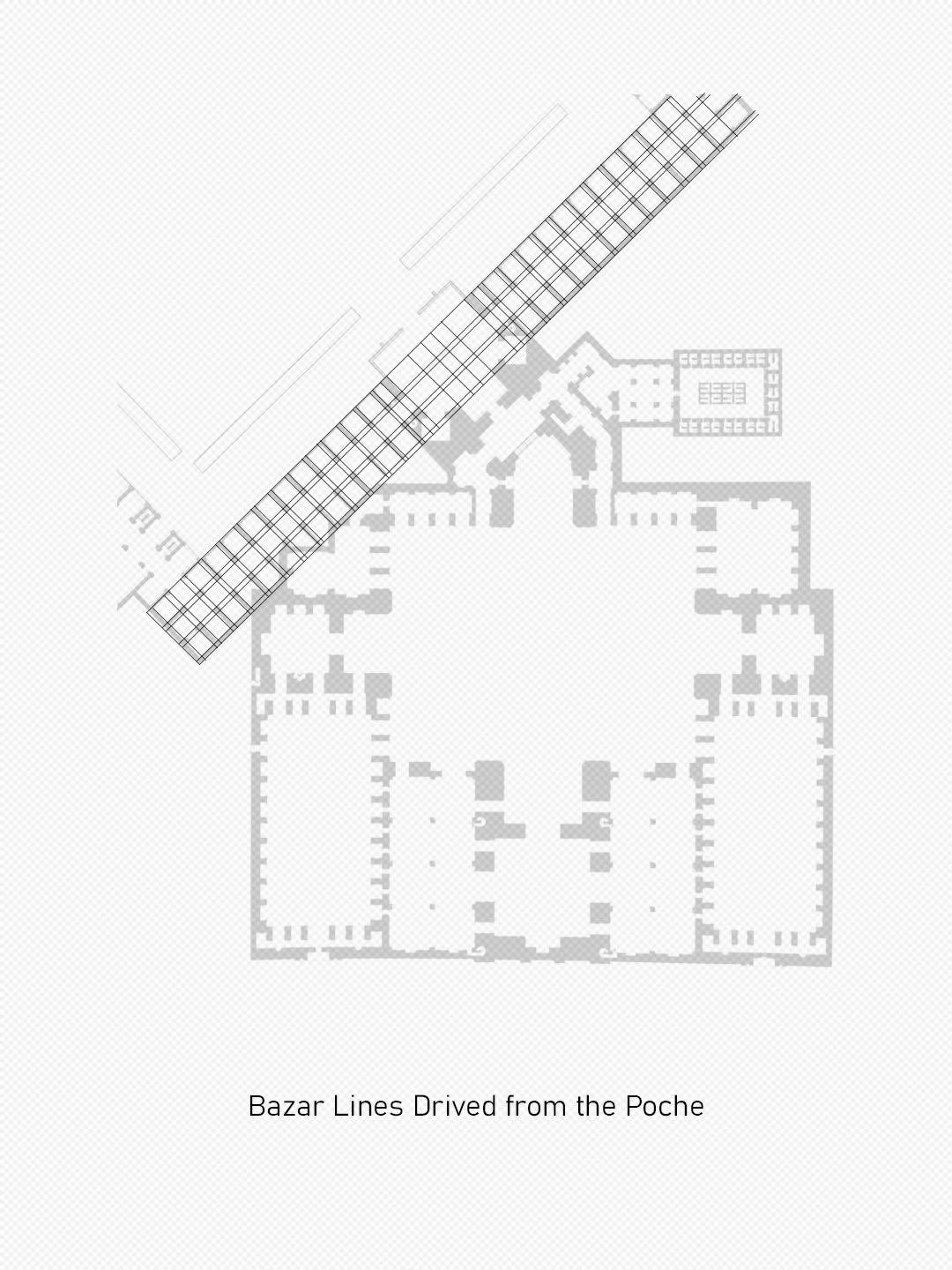
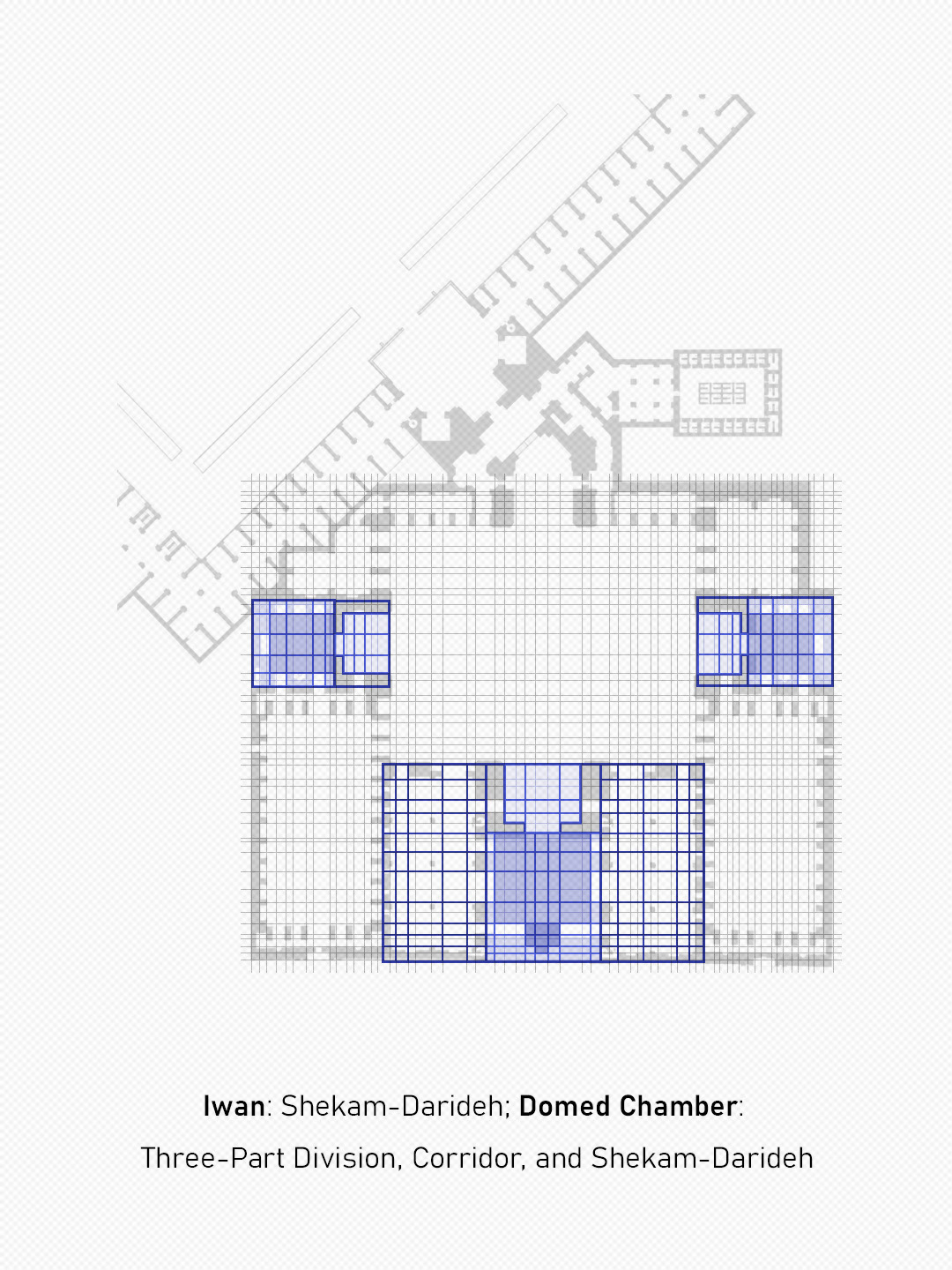
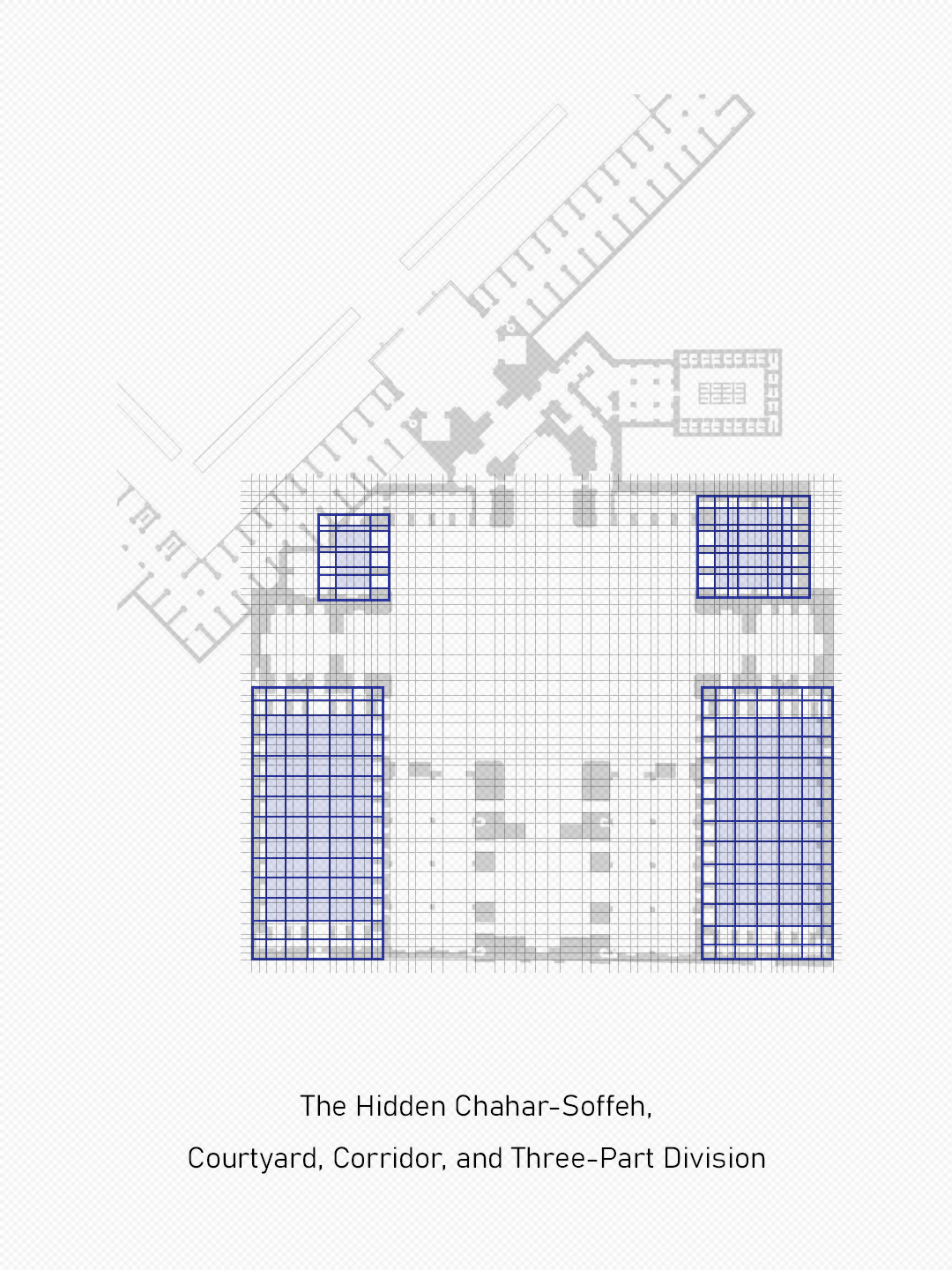
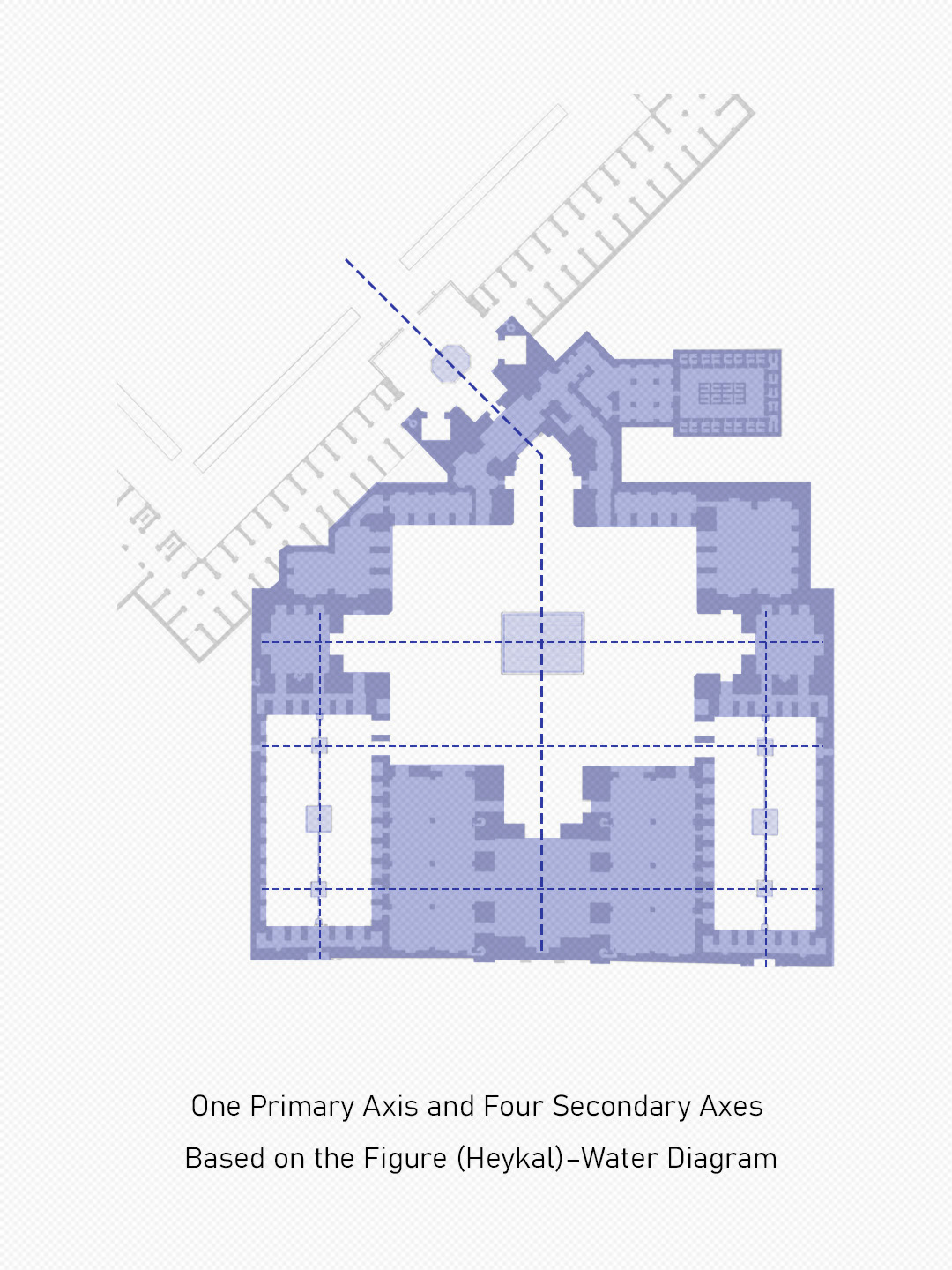
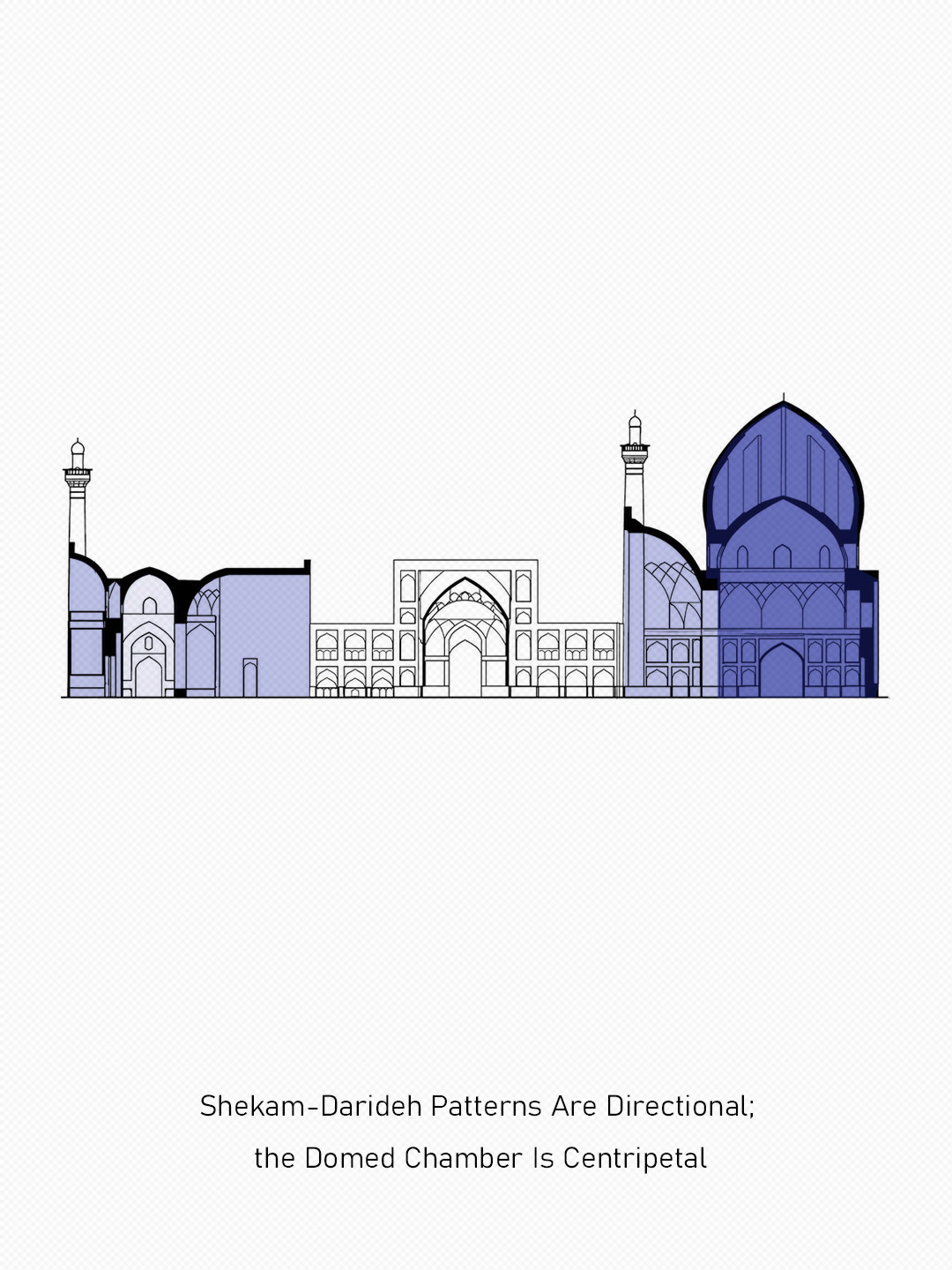
In the Shah Abbas Mosque of Isfahan, the Jelokhān (forecourt), much like that of the Sheikh Lotfollah Mosque, extends from the bazaar and, through incision and recession, gives rise to the Shekam-Darideh pattern. Unlike the Sheikh Lotfollah Mosque, however, the presence of the pool expands the domain of the Jelokhān toward the square. Meanwhile, the narrow side of the Shekam-Darideh, articulated through the Hashti pattern, is perceived as more elementary than its counterpart in the Sheikh Lotfollah Mosque. Upon entering the building, the Shekam-Darideh pattern is repeated and, within the transitional space, subtly rotates toward the qibla. In the diagrammatic reframing of the Shah Abbas Mosque, understanding the overarching Chahar-Iwan pattern as explicit and the overarching Chahar-Soffeh pattern as implicit is of fundamental importance. Their superposition establishes the center of the courtyard as the architectural telos. Yet the presence of two elongated side courtyards, aligned with the water axes, redirects movement from this geometric destination toward the spatial destination of the southern domed chamber.
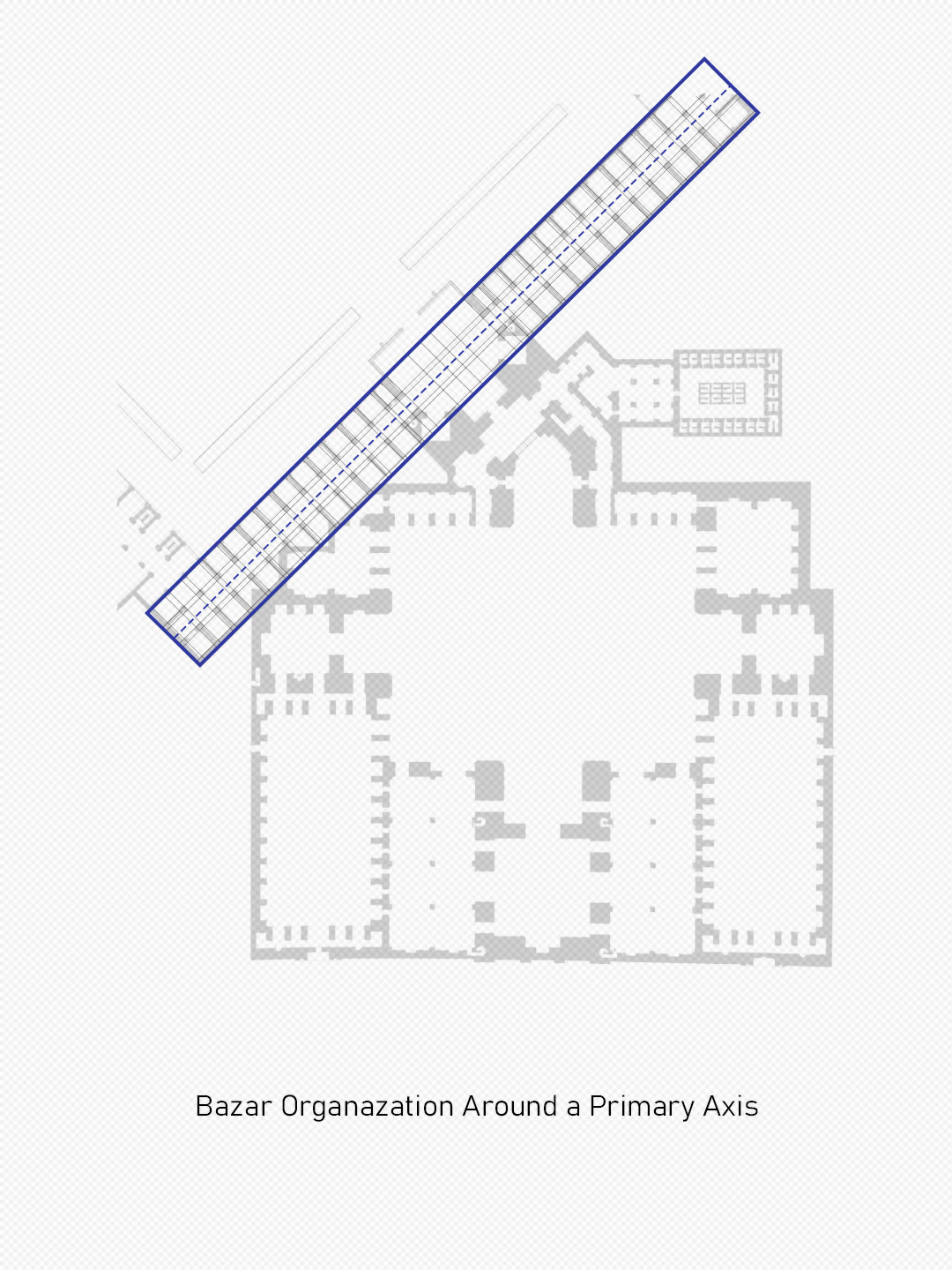
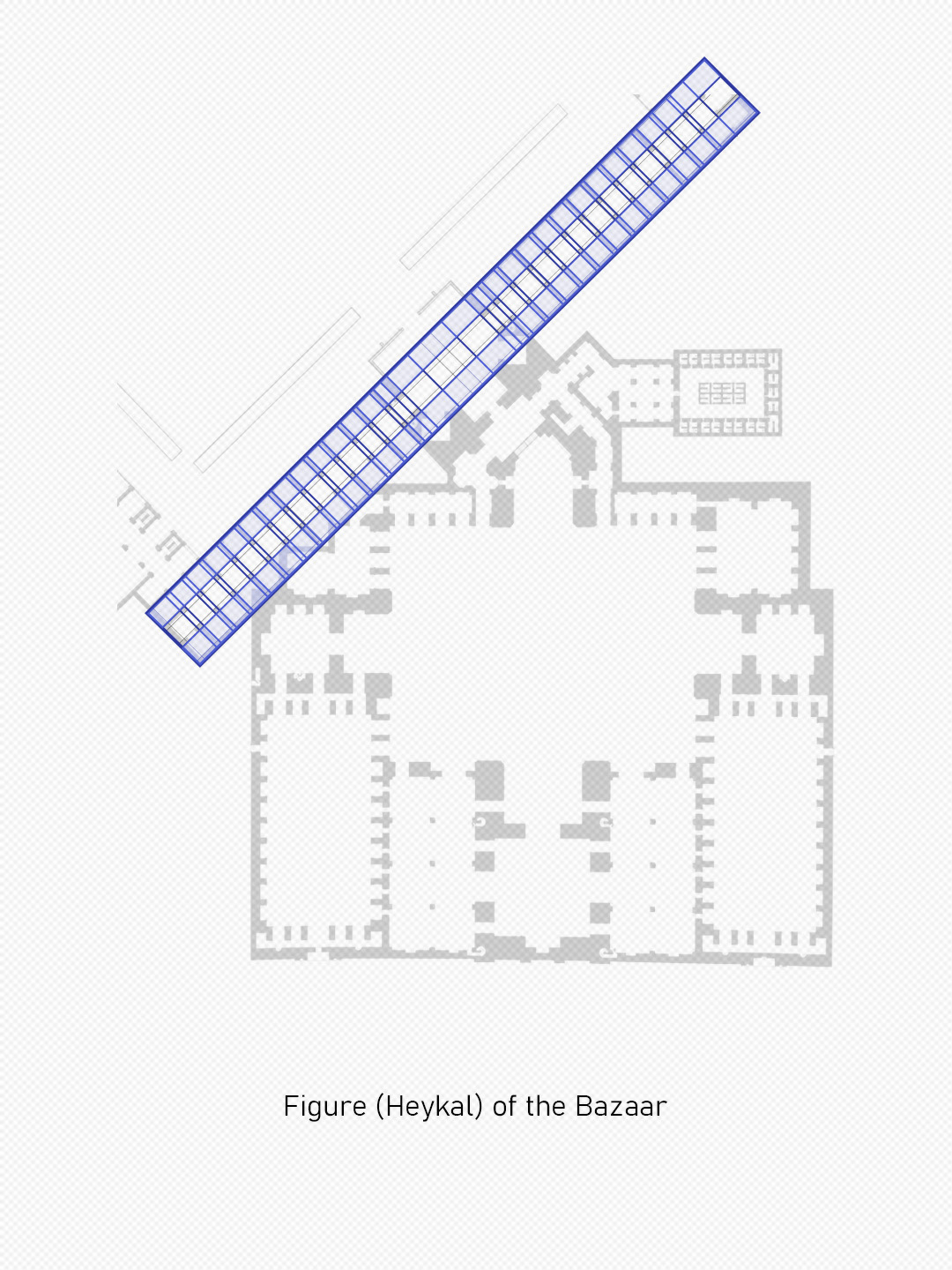
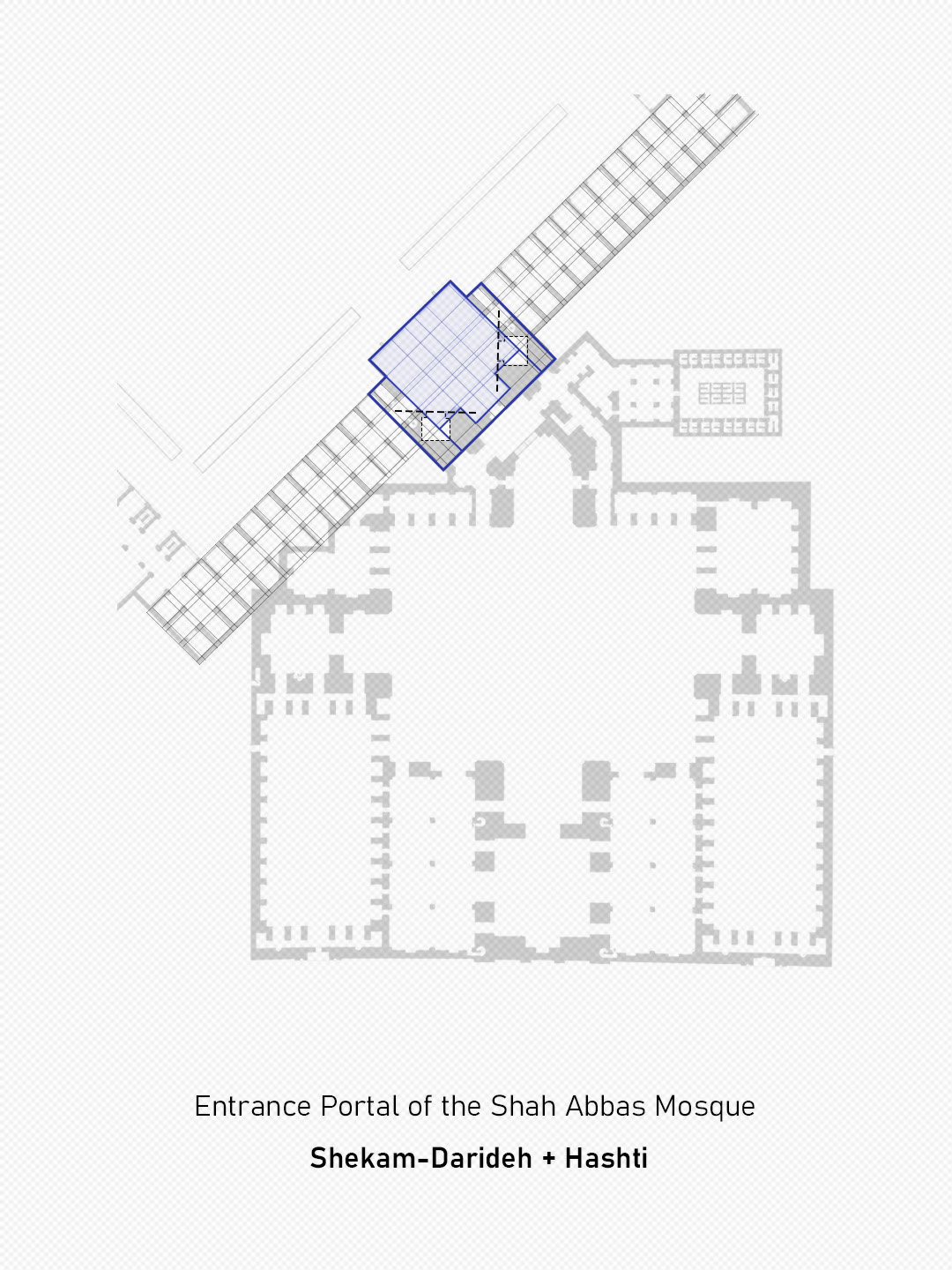
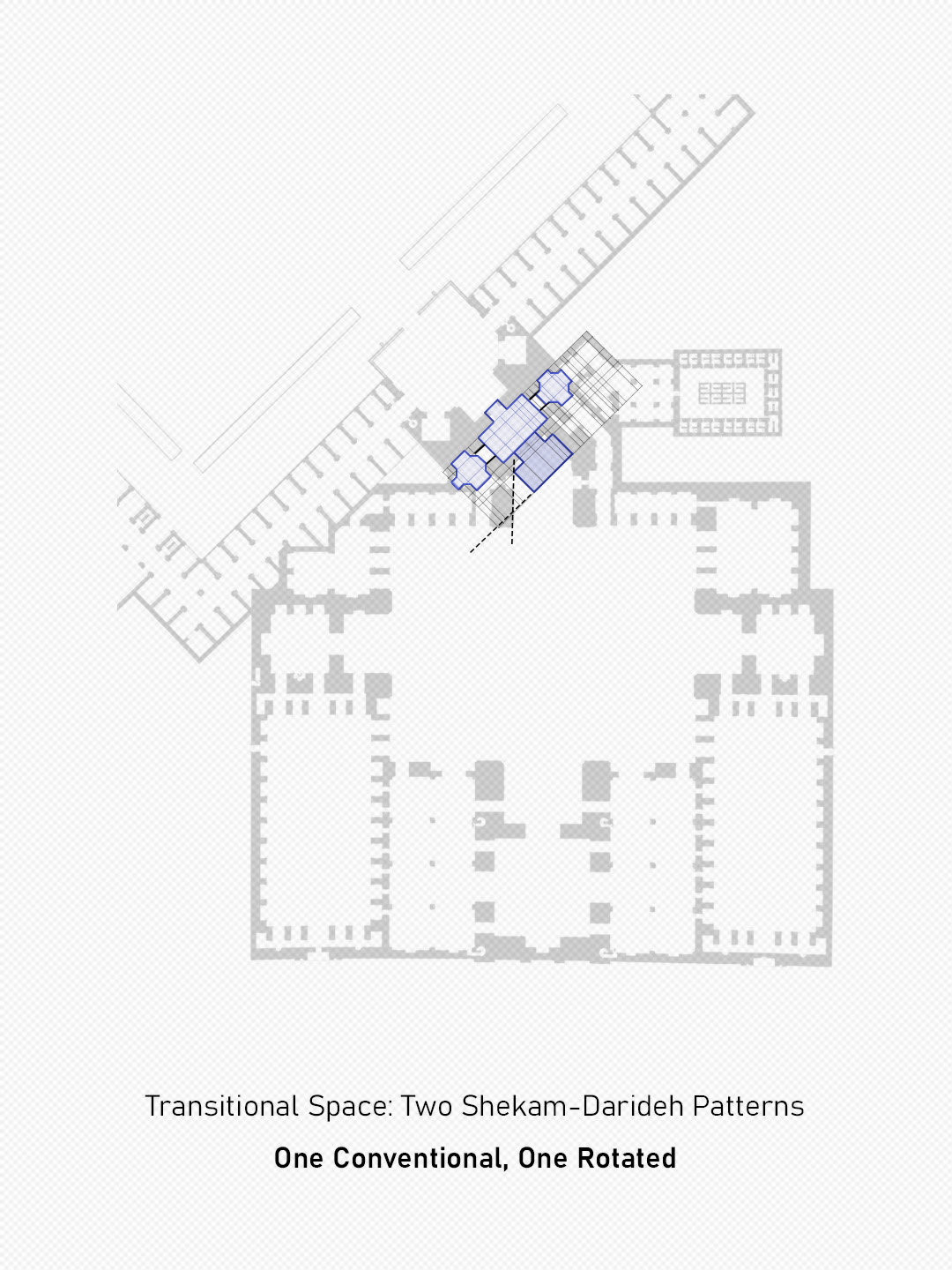
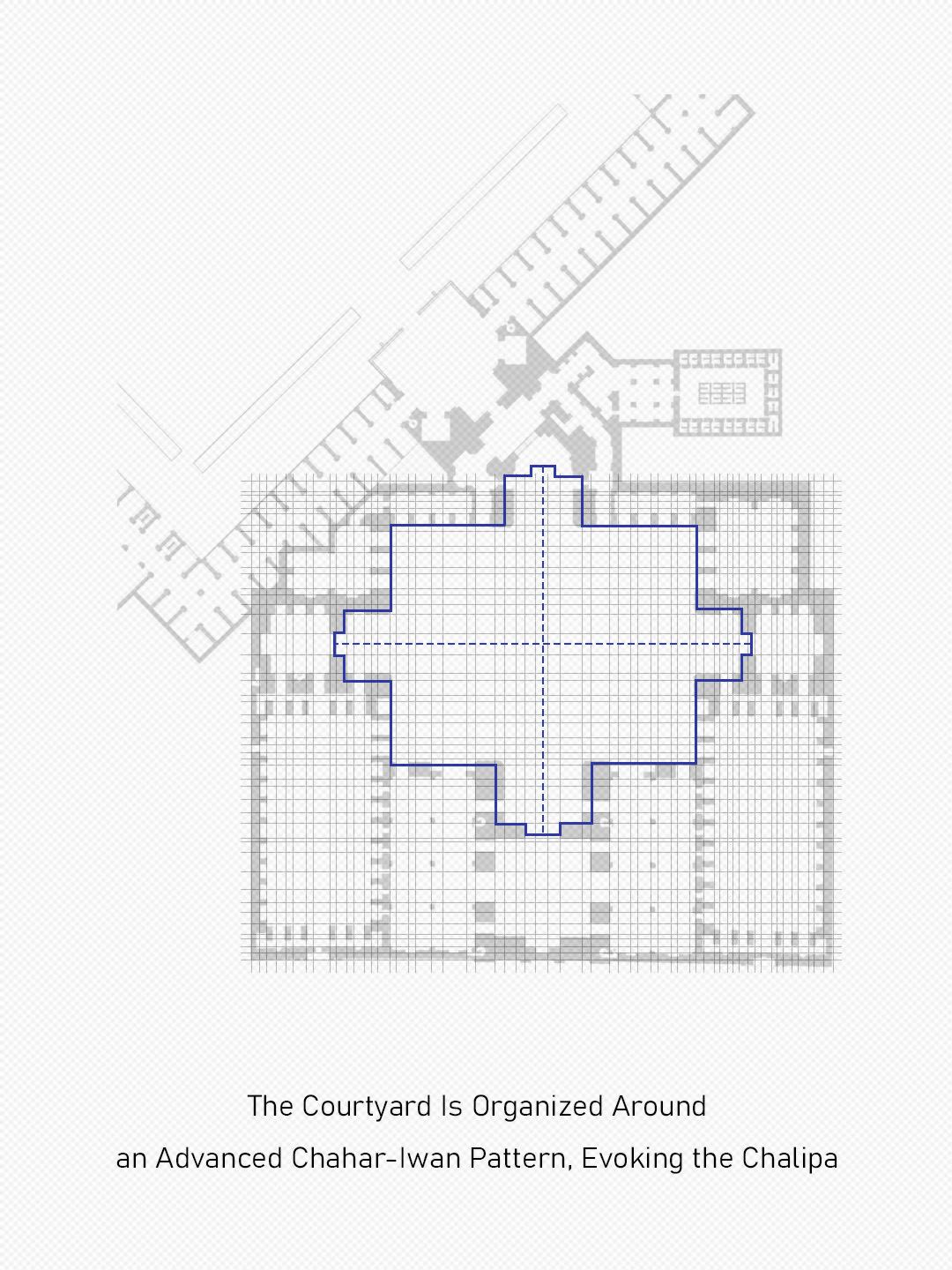
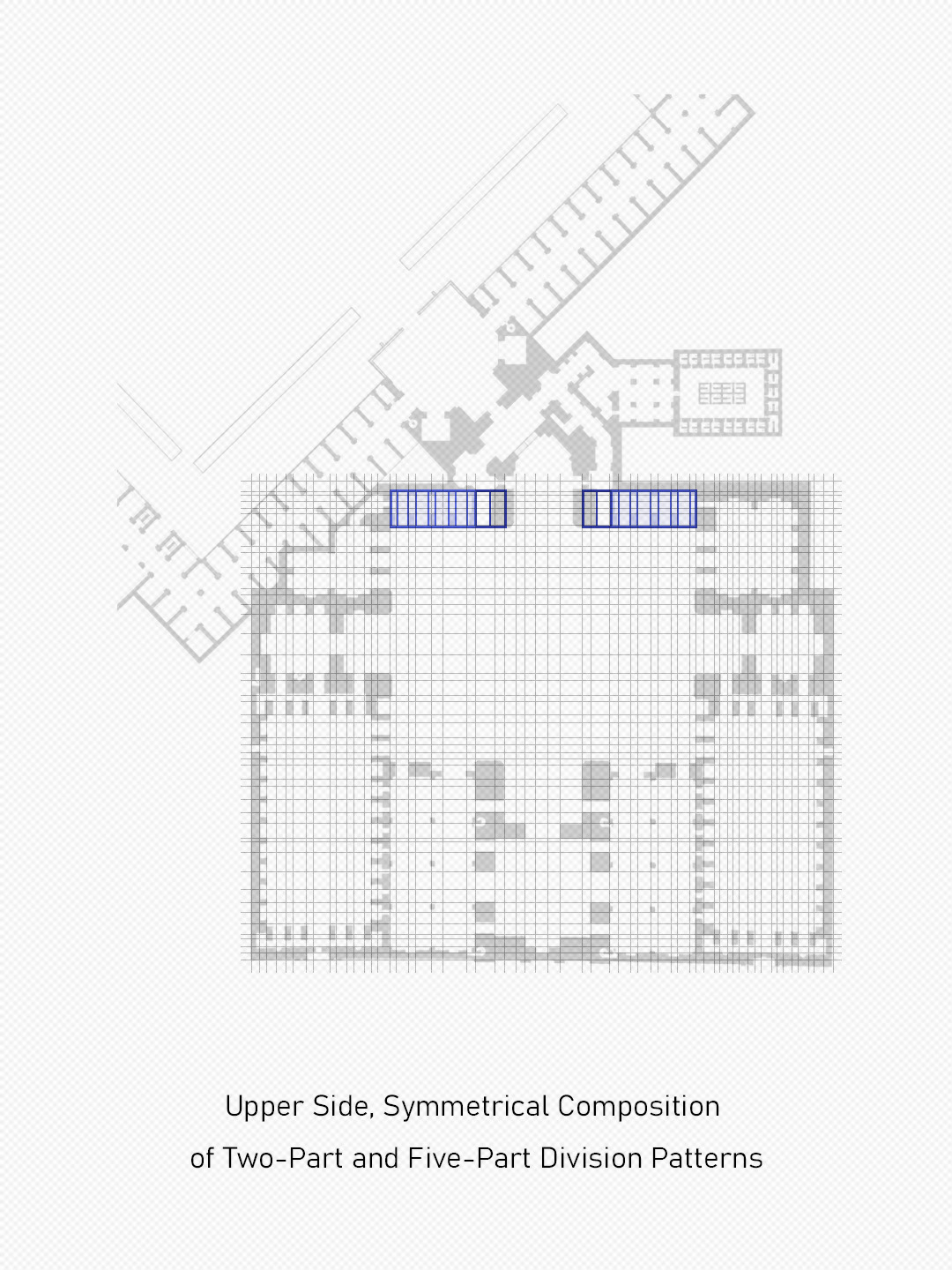
در مسجد شاه عباس اصفهان، جلوخان همانند مسجد شیخ لطفالله در امتداد بازار و با تقطیع و عقبرفتگی، الگوی شکمدریده را پدید میآورد؛ با این تفاوت که حضور حوض، محدودهی جلوخان را به سوی میدان گسترش میدهد. از سوی دیگر، ضلع باریک شکمدریده با الگوی هشتی، نسبت به مسجد شیخ لطفالله، بسیطتر احساس میشود. با ورود به بنا، شکمدریده دوباره تکرار میشود و در فضای تقسیم، بهطور نامحسوس به سوی قبله میچرخد. در بازخوانی دیاگرامی مسجد شاه عباس، فهم الگوی فرادستی چهارایوانی بهصورت عیان و الگوی فرادستی چهارصفه بهصورت پنهان، اهمیتی بنیادین دارد؛ زیرا برهمنشینیِ این دو، مرکز حیاط را بهعنوان غایت معرفی میکند. بااینحال، حضور دو حیاط جانبی و کشیده در امتداد محورهای منطبق با آب، مسیر حرکت را از غایت هندسه به سوی غایت فضا در گنبدخانهی جنوبی سوق میدهد
Research | Mohammad Reza Mahmoudi
Developed from the Analytical Method of Faramarz Parsi
Date | November 2025