Isfahan Cycling Festival
Can a UNESCO World Heritage site become a platform for contemporary urban experiences without compromising its historical identity?
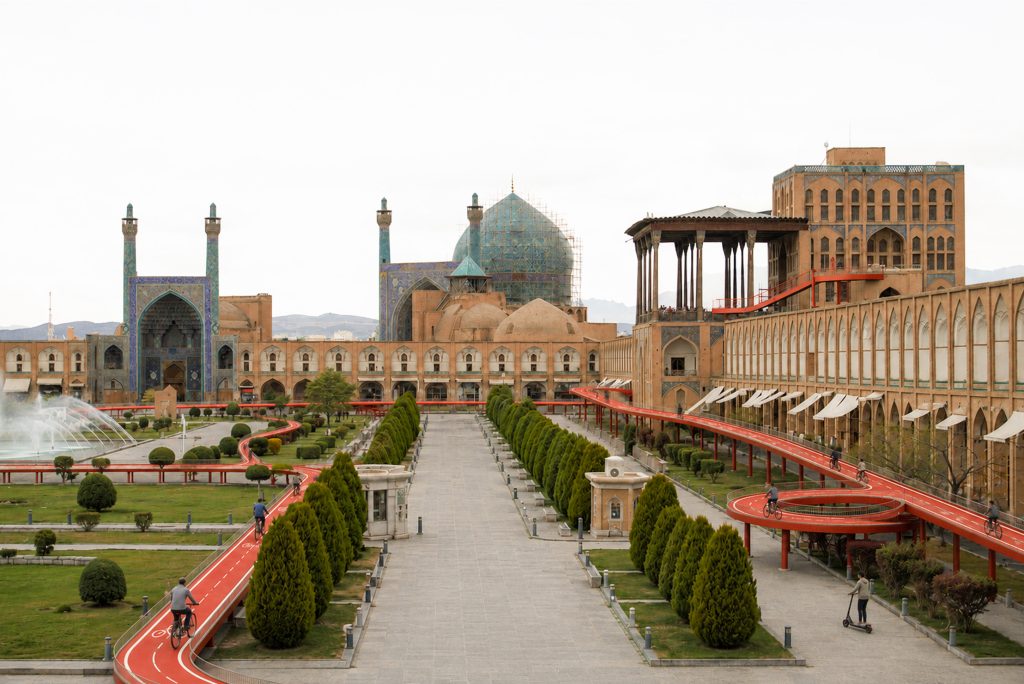
This question became the starting point of the Isfahan Cycling Festival, a conceptual proposal developed after observing how pedestrians, tourists, children, and electric scooter riders increasingly share the same ground within Naqsh-e Jahan Square. While riding scooters through the square with friends, it became clear that the coexistence of different speeds and modes of movement creates both opportunities and conflicts. Rather than treating mobility as an isolated infrastructure problem, the project explores how it can become an architectural and urban experience.
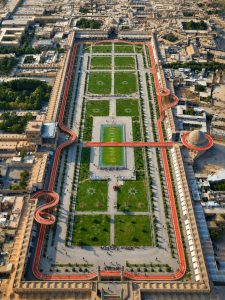
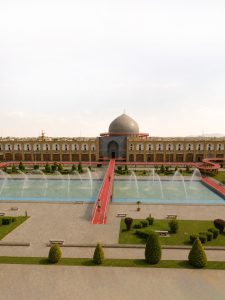
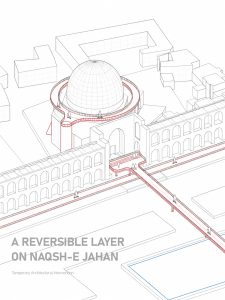
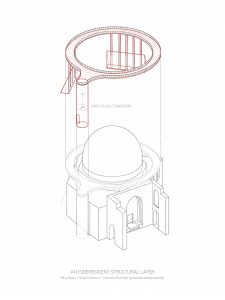
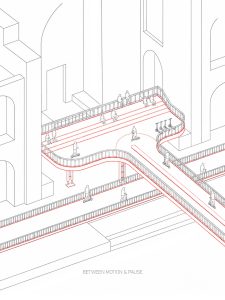
The proposal introduces a temporary, modular, and fully reversible circulation system that separates cycling and scooter movement from pedestrian activity while preserving the historic fabric of the square. Conceived as an independent structural layer, the intervention has no physical connection to the historic monuments and transfers no structural loads to the existing buildings. Designed as a short-term urban festival, it can be assembled, dismantled, and reused without permanently altering the site.
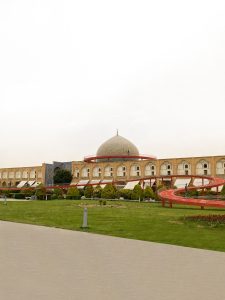
More than a circulation network, the project is conceived as a sequence of spatial experiences. Elevated pathways reveal Naqsh-e Jahan Square from unfamiliar heights and perspectives, allowing visitors to rediscover one of the world’s most significant public spaces through movement. Around Sheikh Lotfollah Mosque, the circular pathway is not simply an observation deck but an architectural narrative inspired by the mosque itself: a controlled vertical transition from darkness to light, from compression to openness, and from movement to contemplation.
The project does not seek to imitate the historical language of the square. Instead, it introduces a clearly contemporary layer whose temporary nature distinguishes it from the permanent heritage beneath. Its intention is not to redefine Naqsh-e Jahan, but to invite a renewed way of experiencing it through motion, pause, observation, and social interaction.
Ultimately, the Isfahan Cycling Festival is less about scooters or bicycles than about questioning how historic public spaces can accommodate contemporary urban life. Rather than proposing a permanent transformation, it offers a reversible architectural intervention that stimulates discussion about the relationship between heritage preservation, public space, and new forms of collective experience.